Domain fotoshoots.de kaufen?
Wir ziehen mit dem Projekt
fotoshoots.de um.
Sind Sie am Kauf der Domain
fotoshoots.de interessiert?
domain@kv-gmbh.de · 0541-91531010
Domain fotoshoots.de kaufen?
Was ist log(1) / log(11000) und warum?
log(1) / log(11000) ist gleich 0, da der Logarithmus von 1 immer 0 ergibt. Da der Logarithmus von 11000 größer als 1 ist, wird 0 durch eine größere Zahl geteilt, was zu einem Ergebnis von 0 führt. Dies liegt daran, dass der Logarithmus einer Zahl x zur Basis x immer 1 ergibt. **
Sagt ihr "der Log-in" oder "das Log-in"?
Beide Varianten sind möglich, aber "der Log-in" wird häufiger verwendet. Es handelt sich dabei um eine Anglizismus-Anpassung des englischen Begriffs "login". **
Ähnliche Suchbegriffe für Devart-dbForge-Transaction-Log
Top-Angebote
Produkte zum Begriff Devart-dbForge-Transaction-Log:
-
Edvard Munch PortraitsEdvard Munch Portraits , Edvard Munch Portraits brings together 80 of Munch's most significant portraits, showcasing the wide array of styles, techniques and mediums that he employed. Edvard Munch (1863 - 1944) is widely regarded as one of the great artists of the nineteenth and twentieth centuries. Although he was lesser known for portraiture, his portraits were central to his art and vision. During the course of his long life he made hundreds of portraits of friends, patrons, models and above all himself, in a range of media that encompassed painting, drawing and print. Edvard Munch Portraits explores the range of portraits Munch created during his lifetime, and by placing his work in the cultural and historical background of his period, provides readers with a greater understanding of the time in which his works were produced. This publication gives deep insight into the artist's family and bohemian social circles, along with his German and Norwegian patrons and the friends who helped establish his reputation. , > , Erscheinungsjahr: 20250306, Produktform: Leinen, Autoren: Smith, Alison~Ljøgodt, Knut, Redaktion: Smith, Alison, Seitenzahl/Blattzahl: 176, Themenüberschrift: ART / Collections, Catalogs, Exhibitions / General, Fachschema: Ausstellungskatalog~Porträt (Fotografie, Kunst), Fachkategorie: Ausstellungskataloge, Museumskataloge und Sammlungen, Imprint-Titels: National Portrait Gallery, Warengruppe: HC/Kunst, UNSPSC: 49019900, Warenverzeichnis für die Außenhandelsstatistik: 49019900, Länge: 300, Breite: 230, Höhe: 21, Gewicht: 1120, Produktform: Gebunden, Genre: Importe,35,70 €*Versand: 0,00 €Sichere Weiterleitung zum Anbieter

-
Wächst log(n) genau so schnell wie log(n70)?
Nein, log(n) wächst langsamer als log(n70). Die Funktion log(n) gibt den Logarithmus von n zur Basis 10 zurück, während log(n70) den Logarithmus von n70 zur Basis 10 berechnet. Da n70 größer ist als n, ist log(n70) größer als log(n) und wächst daher schneller. **
-
Wie kann ich log 10 log 2 ohne Taschenrechner berechnen?
Um log 10 log 2 zu berechnen, kannst du die Logarithmengesetze verwenden. Da log 10 den Wert 1 hat, kannst du log 10 log 2 als log 2 berechnen. Da log 2 ungefähr 0,3010 ist, ist log 10 log 2 ungefähr 0,3010. **
-
Was heist log?
"Was heißt log?" ist eine Frage, die sich auf den Begriff "log" bezieht, der verschiedene Bedeutungen haben kann. Im Allgemeinen wird "log" als Abkürzung für "Logarithmus" verwendet, eine mathematische Funktion, die das Verhältnis zwischen zwei Zahlen angibt. In der Informatik kann "log" auch als Abkürzung für "Logdatei" verwendet werden, in der Informationen über Ereignisse oder Aktivitäten gespeichert werden. Darüber hinaus kann "log" auch als Verb verwendet werden, um das Aufzeichnen von Informationen oder Ereignissen zu beschreiben. Letztendlich hängt die Bedeutung von "log" stark vom Kontext ab, in dem es verwendet wird. **
-
Was bedeutet der Ausdruck "O(n log n)" in der Informatik?
Der Ausdruck "O(n log n)" ist eine Angabe zur Laufzeitkomplexität eines Algorithmus. Er besagt, dass die Laufzeit des Algorithmus proportional zur Größe der Eingabe (n) multipliziert mit dem Logarithmus der Größe der Eingabe ist. Ein Algorithmus mit dieser Laufzeitkomplexität ist in der Regel effizienter als ein Algorithmus mit einer Laufzeitkomplexität von O(n^2), aber weniger effizient als ein Algorithmus mit einer Laufzeitkomplexität von O(n). **
Wie spricht man "log n" aus, ausgesprochen "log stern von n"?
"Log n" spricht man als "logarithmus von n" aus. **
Wie berechnet man \(a^{a \log x}\) und \(a^{2a \log 2}\)?
Um \(a^{a \log x}\) zu berechnen, können wir die Potenzregel \(a^{b \cdot c} = (a^b)^c\) verwenden. Somit ergibt sich \(a^{a \log x} = (a^a)^{\log x}\). Für \(a^{2a \log 2}\) können wir ebenfalls die Potenzregel anwenden und erhalten \(a^{2a \log 2} = (a^{a \log 2})^2\). Anschließend können wir die Potenzen von \(a\) und \(a \log 2\) berechnen, indem wir die Exponentialfunktion verwenden. **
Top-Angebote
Produkte zum Begriff Devart-dbForge-Transaction-Log:
-
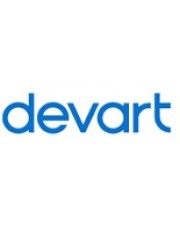
Silent PortraitsSilent Portraits , On over 300 pages of this high-quality art print, you will encounter the fascinating world of meditation. How does an inner journey begin to take form, manifesting as a silent communication? In his photographic homage to the beauty and power of meditation, Axel Kirchhoff answers this question simply: by looking. This mindful pause is also the starting point for encountering the 66 protagonists who, in various forms, reveal their process of inner work. Silent Portraits is a collection of quotes and portraits from a diverse range of protagonists. Alongside the silent yet vibrant black-and-white photographs, the protagonists provide personal descriptions of their approaches and experiences with inner work. Insights into the effects of mental exercise, drawn from conversations with renowned author and neuroscientist Dr. Ulrich Ott from the Giessen Bender Institute of Neuroimaging (BION), round out the book. Text in English and German. , Luftversorgung > Auto-Tuning & -Styling , Erscheinungsjahr: 20241101, Produktform: Leinen, Autoren: Kirchhoff, Axel, Fotograph: Kirchhoff, Axel, Seitenzahl/Blattzahl: 320, Abbildungen: 66 black and white illustrations, Themenüberschrift: PHOTOGRAPHY / Individual Photographers / General, Keyword: axel kirchhoff; medidations buch; seltmann; silent portraits, Fachschema: Farbfotografie~Fotografie~Photo~Photographie, Fachkategorie: Fotografie: Porträts & Selbstporträts~Kunst: allgemeine Themen, Warengruppe: HC/Fotografie, UNSPSC: 49019900, Warenverzeichnis für die Außenhandelsstatistik: 49019900, Länge: 268, Breite: 240, Höhe: 31, Gewicht: 1100, Produktform: Gebunden, Genre: Geisteswissenschaften/Kunst/Musik,59,00 €*Versand: 0,00 €Sichere Weiterleitung zum Anbieter
-
Edvard Munch PortraitsEdvard Munch Portraits , Edvard Munch Portraits brings together 80 of Munch's most significant portraits, showcasing the wide array of styles, techniques and mediums that he employed. Edvard Munch (1863 - 1944) is widely regarded as one of the great artists of the nineteenth and twentieth centuries. Although he was lesser known for portraiture, his portraits were central to his art and vision. During the course of his long life he made hundreds of portraits of friends, patrons, models and above all himself, in a range of media that encompassed painting, drawing and print. Edvard Munch Portraits explores the range of portraits Munch created during his lifetime, and by placing his work in the cultural and historical background of his period, provides readers with a greater understanding of the time in which his works were produced. This publication gives deep insight into the artist's family and bohemian social circles, along with his German and Norwegian patrons and the friends who helped establish his reputation. , > , Erscheinungsjahr: 20250306, Produktform: Leinen, Autoren: Smith, Alison~Ljøgodt, Knut, Redaktion: Smith, Alison, Seitenzahl/Blattzahl: 176, Themenüberschrift: ART / Collections, Catalogs, Exhibitions / General, Fachschema: Ausstellungskatalog~Porträt (Fotografie, Kunst), Fachkategorie: Ausstellungskataloge, Museumskataloge und Sammlungen, Imprint-Titels: National Portrait Gallery, Warengruppe: HC/Kunst, UNSPSC: 49019900, Warenverzeichnis für die Außenhandelsstatistik: 49019900, Länge: 300, Breite: 230, Höhe: 21, Gewicht: 1120, Produktform: Gebunden, Genre: Importe,35,70 €*Versand: 0,00 €Sichere Weiterleitung zum Anbieter
-
Was ist log(1) / log(11000) und warum?
log(1) / log(11000) ist gleich 0, da der Logarithmus von 1 immer 0 ergibt. Da der Logarithmus von 11000 größer als 1 ist, wird 0 durch eine größere Zahl geteilt, was zu einem Ergebnis von 0 führt. Dies liegt daran, dass der Logarithmus einer Zahl x zur Basis x immer 1 ergibt. **
-
Sagt ihr "der Log-in" oder "das Log-in"?
Beide Varianten sind möglich, aber "der Log-in" wird häufiger verwendet. Es handelt sich dabei um eine Anglizismus-Anpassung des englischen Begriffs "login". **
-
Wächst log(n) genau so schnell wie log(n70)?
Nein, log(n) wächst langsamer als log(n70). Die Funktion log(n) gibt den Logarithmus von n zur Basis 10 zurück, während log(n70) den Logarithmus von n70 zur Basis 10 berechnet. Da n70 größer ist als n, ist log(n70) größer als log(n) und wächst daher schneller. **
-
Wie kann ich log 10 log 2 ohne Taschenrechner berechnen?
Um log 10 log 2 zu berechnen, kannst du die Logarithmengesetze verwenden. Da log 10 den Wert 1 hat, kannst du log 10 log 2 als log 2 berechnen. Da log 2 ungefähr 0,3010 ist, ist log 10 log 2 ungefähr 0,3010. **
Ähnliche Suchbegriffe für Devart-dbForge-Transaction-Log
-
Was heist log?
"Was heißt log?" ist eine Frage, die sich auf den Begriff "log" bezieht, der verschiedene Bedeutungen haben kann. Im Allgemeinen wird "log" als Abkürzung für "Logarithmus" verwendet, eine mathematische Funktion, die das Verhältnis zwischen zwei Zahlen angibt. In der Informatik kann "log" auch als Abkürzung für "Logdatei" verwendet werden, in der Informationen über Ereignisse oder Aktivitäten gespeichert werden. Darüber hinaus kann "log" auch als Verb verwendet werden, um das Aufzeichnen von Informationen oder Ereignissen zu beschreiben. Letztendlich hängt die Bedeutung von "log" stark vom Kontext ab, in dem es verwendet wird. **
-
Was bedeutet der Ausdruck "O(n log n)" in der Informatik?
Der Ausdruck "O(n log n)" ist eine Angabe zur Laufzeitkomplexität eines Algorithmus. Er besagt, dass die Laufzeit des Algorithmus proportional zur Größe der Eingabe (n) multipliziert mit dem Logarithmus der Größe der Eingabe ist. Ein Algorithmus mit dieser Laufzeitkomplexität ist in der Regel effizienter als ein Algorithmus mit einer Laufzeitkomplexität von O(n^2), aber weniger effizient als ein Algorithmus mit einer Laufzeitkomplexität von O(n). **
-
Wie spricht man "log n" aus, ausgesprochen "log stern von n"?
"Log n" spricht man als "logarithmus von n" aus. **
-
Wie berechnet man \(a^{a \log x}\) und \(a^{2a \log 2}\)?
Um \(a^{a \log x}\) zu berechnen, können wir die Potenzregel \(a^{b \cdot c} = (a^b)^c\) verwenden. Somit ergibt sich \(a^{a \log x} = (a^a)^{\log x}\). Für \(a^{2a \log 2}\) können wir ebenfalls die Potenzregel anwenden und erhalten \(a^{2a \log 2} = (a^{a \log 2})^2\). Anschließend können wir die Potenzen von \(a\) und \(a \log 2\) berechnen, indem wir die Exponentialfunktion verwenden. **
* Alle Preise verstehen sich inklusive der gesetzlichen Mehrwertsteuer und ggf. zuzüglich Versandkosten. Die Angebotsinformationen basieren auf den Angaben des jeweiligen Shops und werden über automatisierte Prozesse aktualisiert. Eine Aktualisierung in Echtzeit findet nicht statt, so dass es im Einzelfall zu Abweichungen kommen kann. ** Hinweis: Teile dieses Inhalts wurden von KI erstellt.